
What Is a Rollerball Pen?
Imagine a pen that combines the rich, flowing ink of a classic fountain pen with the effortless convenience of a ballpoint. That is the rollerball. It employs the same rolling ball mechanism found in a ballpoint but is fed by a liquid, water-based ink that glides onto the page, creating a writing experience that is exceptionally smooth and fluid.
The Essence of the Rollerball Pen

At its heart, the rollerball was created to offer the best of both worlds. It was born from the desire for a pen that could move across the paper with almost no pressure, leaving behind a saturated, characterful line. This unique blend makes it a firm favourite for anyone who appreciates the art of penmanship but requires the practicality of a modern tool.
Using a quality rollerball is as much about the feel as it is about the function. The connection between pen and paper feels direct and fluid, turning the simple act of writing into a more personal, refined experience.
A Bridge Between Tradition and Modernity
In the world of fine writing, the rollerball holds a special place. It elegantly closes the gap between the timeless appeal of a fountain pen and the dependable utility of a ballpoint. For many, it strikes the perfect balance, providing a distinguished writing feel without the maintenance sometimes associated with traditional nibs.
The defining characteristics of a rollerball are:
- Effortless Ink Flow: Its liquid, water-based ink requires very little pressure to write, which helps reduce hand fatigue during longer sessions.
- Vibrant, Crisp Lines: The ink saturates the paper more deeply than a ballpoint's, resulting in bolder and more vivid handwriting.
- A Statement of Style: More than just a tool, a beautifully crafted rollerball, like those from Scriveiner, is an accessory. It signals an appreciation for quality and refined taste.
To hold a finely balanced rollerball is to understand its purpose. It is not merely for jotting notes, but for conveying thoughts with clarity and elegance. The weight, the feel, and the smooth delivery of ink all contribute to a superior penmanship experience.
This thoughtful design makes the rollerball incredibly versatile. It is equally at home signing important documents as it is for journaling or capturing fleeting ideas with a touch of sophistication. It is an instrument for those who believe that how words are written is just as important as the words themselves.
The Mechanics of Effortless Writing
The superb performance of a rollerball pen comes down to a beautifully simple piece of engineering. At its core is the ‘ball and socket’ mechanism—a tiny sphere, free to roll, housed at the very tip of the pen. This single design feature is the secret to its fluid, unbroken conversation with the page.
It is distinct from a ballpoint, which uses a thick, oil-based paste that must be physically pushed onto the paper. A rollerball works on a different principle, designed to use a low-viscosity, water-based ink. This thinner ink is the key to the pen’s entire character, allowing it to flow with almost no friction.
The mechanism functions like a perfectly controlled aqueduct. The ink reservoir is the source, and a channel system connected to it ensures the ball at the tip receives a consistent ink supply. As we write, the ball rotates from the contact with the page, pulling more ink from the reservoir through the channel system.
The Science of a Smooth Glide
This elegant marriage of mechanics and chemistry is what creates the rollerball experience. Because the ink is so thin, it requires almost no pressure from your hand to transfer to the paper. The ball simply glides, acting as a valve that releases a rich, saturated line of ink with the slightest touch.
This effortless delivery has tangible benefits:
- Reduced Hand Fatigue: With so little pressure needed, one can write for extended periods with far less strain on the hand and wrist.
- Consistent Line Quality: The steady ink flow means lines are uniform and unbroken, from the first word to the last.
- Expressive Penmanship: The generous way it lays down ink allows for more vibrant, characterful handwriting, much like one would achieve with a classic fountain pen.
A well-crafted rollerball pen is a marvel of fluid dynamics. Its design anticipates the writer's needs, ensuring ink is instantly available the moment tip meets page, yet perfectly contained when not in use. It is this balance that prevents leaks while delivering immediate performance.
Engineering for Reliability
The internal architecture of a quality rollerball is meticulously designed to manage this liquid ink. A series of fine channels and collectors regulates the flow, adapting to changes in pressure and temperature. This prevents the ink from flooding the tip or drying out—a common concern with water-based inks.
This subtle but crucial engineering is what elevates a premium rollerball, like those from Scriveiner, from a simple writing tool to a truly reliable instrument. It is this dedication to mechanical precision that transforms the physical act of writing into an experience of pure, unhindered expression, allowing thoughts to flow onto the page as freely as the ink itself.
If you'd like a complete explanation of how rollerball pens work, read our guide: The Appeal of the Rollerball Pen
Comparing Rollerball, Ballpoint and Fountain Pens
Choosing a fine writing instrument is a deeply personal decision. Each type of pen offers a distinct experience, and the key to finding your perfect match is understanding its unique character. The rollerball, ballpoint, and fountain pen each have their own identity in the world of penmanship.
The rollerball shines as a versatile hybrid. It captures the expressive, saturated lines of a fountain pen and blends them with the simple, reliable convenience of a ballpoint. It is an instrument of balance, offering a fluid and graceful writing experience without the learning curve that sometimes accompanies traditional nibs.
This diagram illustrates the core principles that give the rollerball its famously smooth performance.
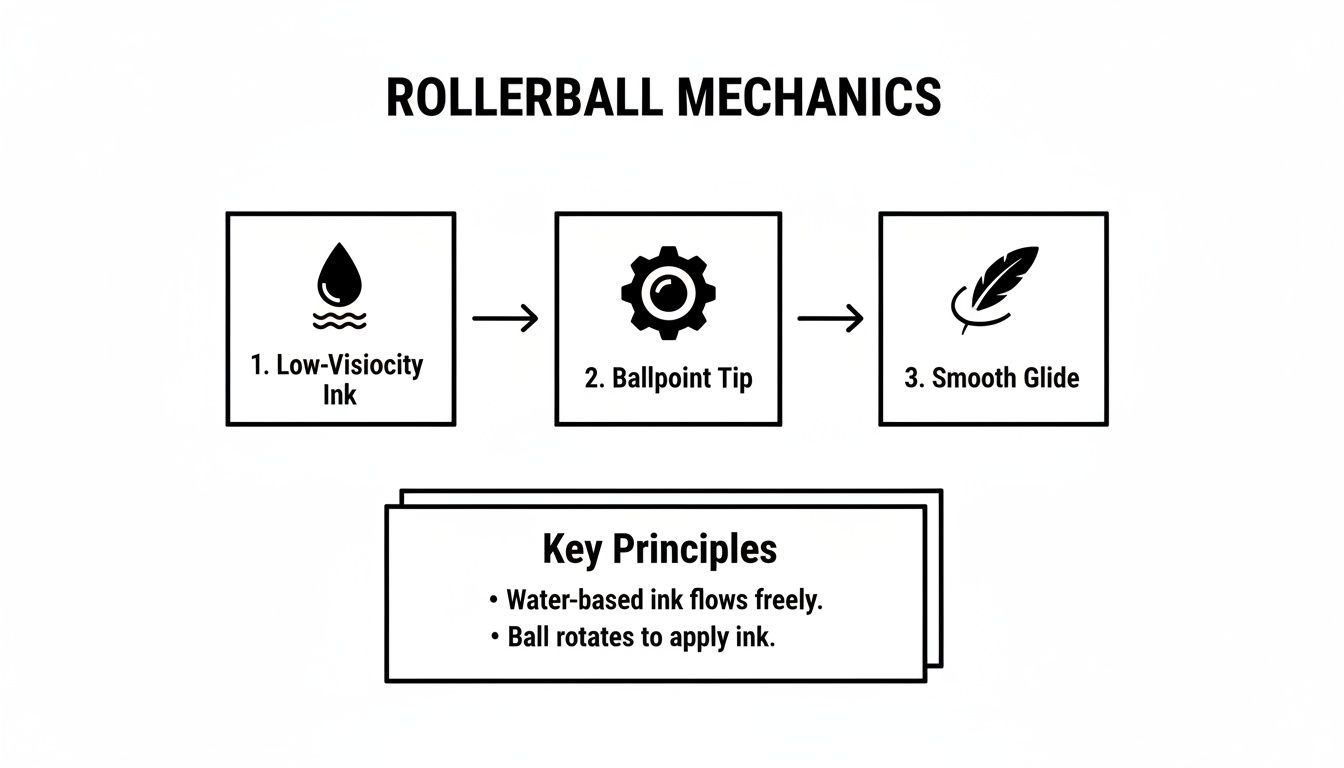
It is this combination of low-viscosity ink and a precision ballpoint tip that results in such an effortless glide across the page.
The Dependable Ballpoint
The ballpoint pen, by contrast, is the quintessential workhorse. It is valued for its sheer dependability. Its oil-based ink is permanent and performs exceptionally well on a variety of surfaces, including glossy paper or when making carbon copies.
Writing with a ballpoint requires more pressure, as the thick, paste-like ink has to be actively rolled onto the page. This makes it a robust choice for quick notes and everyday tasks where permanence and practicality are the top priorities. If you wish to learn more, you can explore the difference between rollerball and ballpoint pens in our dedicated article.
The Timeless Fountain Pen
The fountain pen is the purist's instrument, revered for its timeless elegance and the unparalleled connection it creates between writer and page. It demands a delicate touch, allowing the nib to glide as ink is drawn out by capillary action. Writing becomes almost effortless.
A fountain pen is not just a tool; it is a tradition. Using one transforms writing from a mere task into a deliberate art form, offering a level of customisation and sensory feedback that is truly its own.
This classic instrument provides the most personal writing experience, as its nib subtly adapts to your hand over time. It does, however, require more maintenance, including regular cleaning and careful refilling from bottled ink.
A Comparative Guide to Fine Writing Instruments
To help clarify these distinctions, the table below offers a direct comparison of their key attributes. It is designed to help you align your personal style and writing needs with the ideal instrument.
| Characteristic | Rollerball Pen | Ballpoint Pen | Fountain Pen |
|---|---|---|---|
| Ink Type | Water-based (liquid or gel) | Oil-based (paste) | Water-based (liquid) |
| Writing Pressure | Very light pressure needed | Firm pressure required | Almost no pressure needed |
| Line Quality | Bold, saturated, and crisp | Consistent but less vibrant | Expressive, with line variation |
| Maintenance | Low; requires capping | Very low; often retractable | Medium; requires regular cleaning |
| Best For | Expressive daily writing, signatures | Quick notes, forms, reliability | Deliberate writing, calligraphy |
Ultimately, whether you lean towards the modern fluidity of a rollerball, the steadfast reliability of a ballpoint, or the classic elegance of a fountain pen, the right choice is the one that feels most natural in your hand.
The Evolution of a Modern Classic
The story of the rollerball is one of quiet innovation, a response to a simple desire: to perfect the daily act of writing. To truly understand what makes a rollerball special, one must look back at why it was created. It was not just a new pen; it was a solution.
Writers appreciated the graceful, expressive lines of a fountain pen but wanted the no-fuss reliability of a ballpoint. The rollerball appeared as the perfect answer, bridging this gap with elegant simplicity. Suddenly, a sophisticated writing experience was available to everyone, without the learning curve.
This new kind of pen quickly found its way into the hands of professionals and enthusiasts who valued its ability to produce striking lines with modern ease. Its arrival was not just a product launch; it was a significant moment in the story of penmanship.
A New Chapter in Penmanship
The rollerball’s growing popularity was more than a trend. It represented a fundamental shift in what people expected from their pens. Its creation marked a new chapter in how we put our thoughts to paper, blending timeless tradition with smart, contemporary engineering. Understanding this history enhances one's appreciation for the modern rollerball.
The rollerball is more than just a functional object; it is a testament to the idea that everyday tools can be both beautiful and practical. It represents the successful marriage of form and function, a modern classic in its own right.
This rapid adoption was particularly clear in the UK during the 1970s and 1980s. British writers eagerly moved from traditional oil-based ballpoints to the new liquid-ink rollerballs that promised darker, smoother lines. By the late 1970s, major retailers were reporting a sharp rise in sales as people embraced the fountain-pen-like feel without any of the maintenance. You can read more about this history of innovation on montblanc-pen.com.
The rollerball did not just secure a place on our desks; it settled into the very culture of writing. It became the pen of choice for those who understood that the quality of a tool directly influences the quality of work—and the simple pleasure taken in creating it.
How to Select Your Ideal Rollerball Pen

Choosing a fine rollerball pen is a personal journey. It goes beyond simple function, touching on aesthetics, comfort, and the very feel of putting pen to paper. The right instrument should feel like an extension of your hand, a quiet partner that makes writing a distinct pleasure.
The character of a pen is often defined by its materials. A Scriveiner, for instance, is crafted from a solid brass core, giving it a reassuring weight that feels both durable and purposeful. This considered substance provides a natural momentum, allowing the tip to glide across the page with minimal effort from the writer.
The finish adds another layer of sensory detail. A gleaming gold or polished chrome finish is not just for visual appeal; it contributes to the tactile experience. To hold such an instrument is to appreciate the flawless construction and perfect harmony of substance and elegance.
Finding Your Perfect Balance and Grip
The balance of a rollerball is paramount, especially for longer writing sessions. An expertly balanced pen sits effortlessly in the hand, its centre of gravity poised to reduce strain. This ensures the pen does most of the work, not your fingers, preventing hand fatigue and allowing thoughts to flow without interruption.
Equally important is the design of the grip section. It must be comfortable to hold, providing confident control without forcing a clenched posture. A well-designed grip complements the pen's overall balance, making it feel natural and intuitive from the moment you pick it up.
The true measure of a luxury rollerball pen is not just how it looks, but how it disappears in your hand, becoming a seamless conduit for your ideas. It is this synergy of weight, balance, and design that transforms the simple act of writing into an experience of personal luxury.
Harmonising Aesthetics with Practicality
Finally, the pen you choose should resonate with your personal style. It is more than a tool; it is an accessory that speaks to an appreciation for fine craftsmanship. When you select a luxury red rollerball pen, you are investing in an object that is both beautiful and built to last.
Consider these elements when making your choice:
- Weight and Substance: Do you prefer a heavier, more substantial pen or something lighter and more nimble? A pen with a brass body offers a satisfying heft.
- Grip and Comfort: Ensure the grip section suits your hand size and writing style for maximum comfort.
- Materials and Finish: The choice of materials, from precious metal plating to lacquered finishes, defines the pen's character and durability.
Ultimately, selecting the right rollerball is about finding the instrument that feels right for you. It is a decision that elevates daily writing from a mundane task to a cherished ritual—a small but meaningful moment of connection and expression.
Proper Care for Your Rollerball Pen
A fine writing instrument is an investment, a companion built for years of reliable service. Like any quality tool, its flawless performance is preserved through simple, consistent care. With just a few thoughtful habits, you can maintain your rollerball’s beauty and function for a lifetime.
The most critical practice is to always cap your pen when not in use. It is a simple act, but it is essential. The liquid, water-based ink that gives a rollerball its signature smooth flow will evaporate if left exposed to the air. Capping it creates an airtight seal, preserving the ink’s fluidity and ensuring a crisp, immediate start every time you pick it up.
A well-maintained rollerball is more than a tool; it is a legacy. Proper care ensures that the pleasure of writing with it can be passed down, its smooth performance a constant for generations.
Maintaining Performance and Longevity
Beyond capping, a little light maintenance will keep your pen in pristine condition. If you ever notice the ink skipping or the line becoming faint, the tip may have collected tiny paper fibres. A gentle wipe of the ballpoint with a soft, lint-free cloth is usually all it takes to clear the obstruction and restore smooth ink delivery.
The lifeblood of your pen, of course, is its refill. Using a high-quality, compatible refill is non-negotiable for maintaining the intended ink flow and preventing damage to the delicate internal mechanism. If you wish to understand your options, our comprehensive guide to rollerball refills offers valuable insights into selecting the perfect match for your pen.
Following these straightforward practices protects your investment, ensuring your rollerball pen remains a dependable and elegant partner for every word you write.
Your Rollerball Questions, Answered
As this guide concludes, a few final questions often come to mind. Exploring these finer points can deepen your appreciation for this exceptional writing tool and help you achieve the best experience.
Here are the answers to some of the most common queries.
Are Rollerball Pens Good for Signing Important Documents?
Yes, a rollerball is an excellent choice for a signature. Its liquid ink lays down a bold, saturated line that feels both distinctive and authoritative, lending a sense of occasion to any document you sign.
For legal or archival documents, it is wise to choose a refill with archival-quality, fraud-resistant ink. This detail ensures your signature remains permanent and secure for years to come.
Why Do Rollerball Pens Need a Cap?
The cap is essential because of the rollerball’s water-based ink. Unlike the thick, oil-based paste found in a ballpoint, this refined liquid ink can evaporate if left exposed to the air for an extended period.
Think of the cap not just as a cover, but as a vital piece of the pen’s engineering. It creates an airtight seal that preserves the ink’s fluidity, guaranteeing your pen writes with a smooth, immediate flow every single time.
Simply capping your pen is the single most important habit for maintaining its performance.
What’s the Best Paper for a Rollerball Pen?
While a quality rollerball will perform well on most paper, its generous ink flow truly shines on higher-quality, heavier paper—anything from 90gsm upwards is a good starting point.
This kind of paper gives the ink the perfect surface to sit on, preventing ‘feathering’ (where the ink bleeds into the paper fibres) or bleed-through to the other side. Using a heavier stock allows the ink's vibrant colour and crisp lines to be fully realised, showing off the true character of your pen.
Your journey into the world of fine writing is a personal one, and choosing the right instrument is the first step. Discover the perfect blend of British design and German engineering with a Scriveiner rollerball pen.


Leave a comment
This site is protected by hCaptcha and the hCaptcha Privacy Policy and Terms of Service apply.